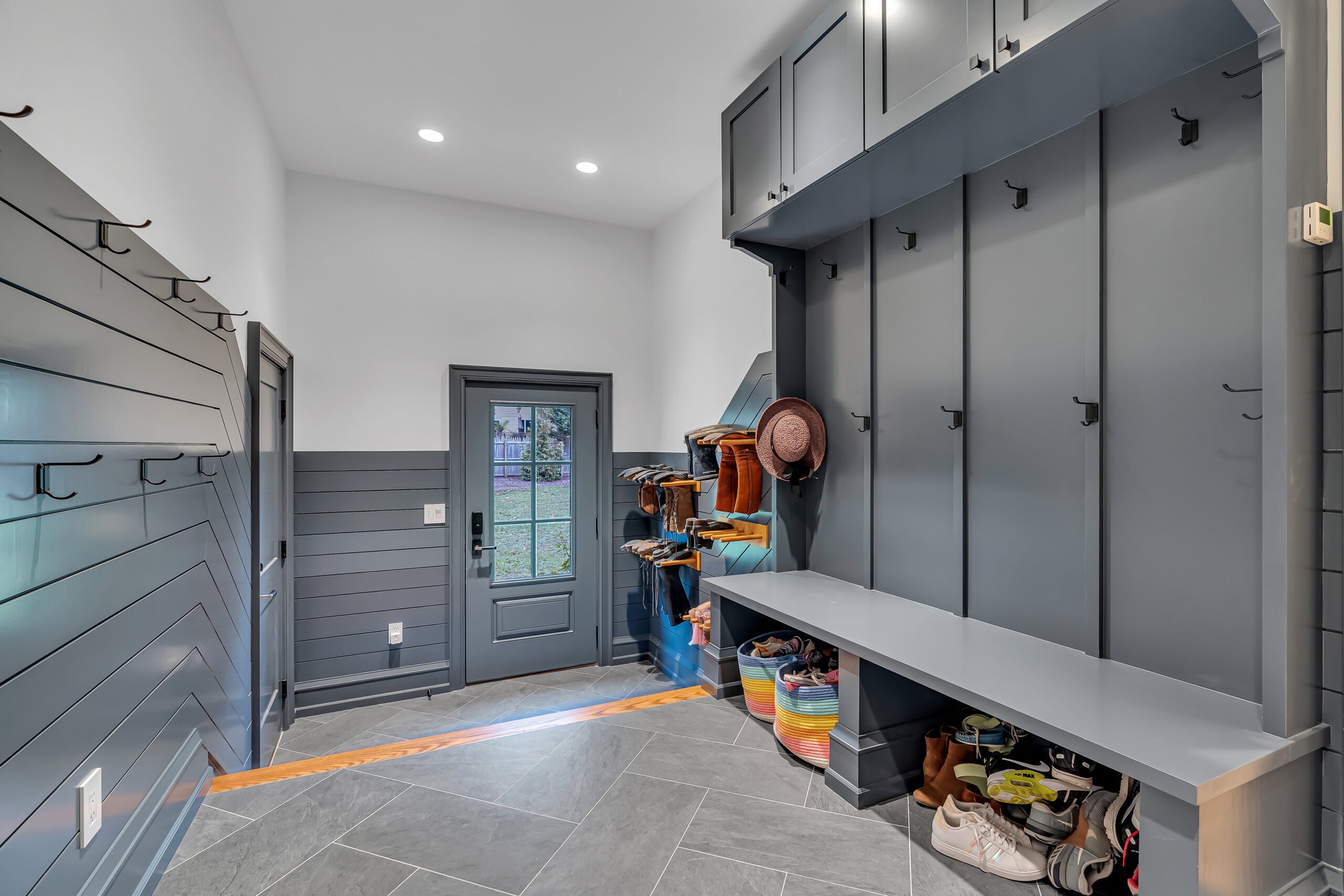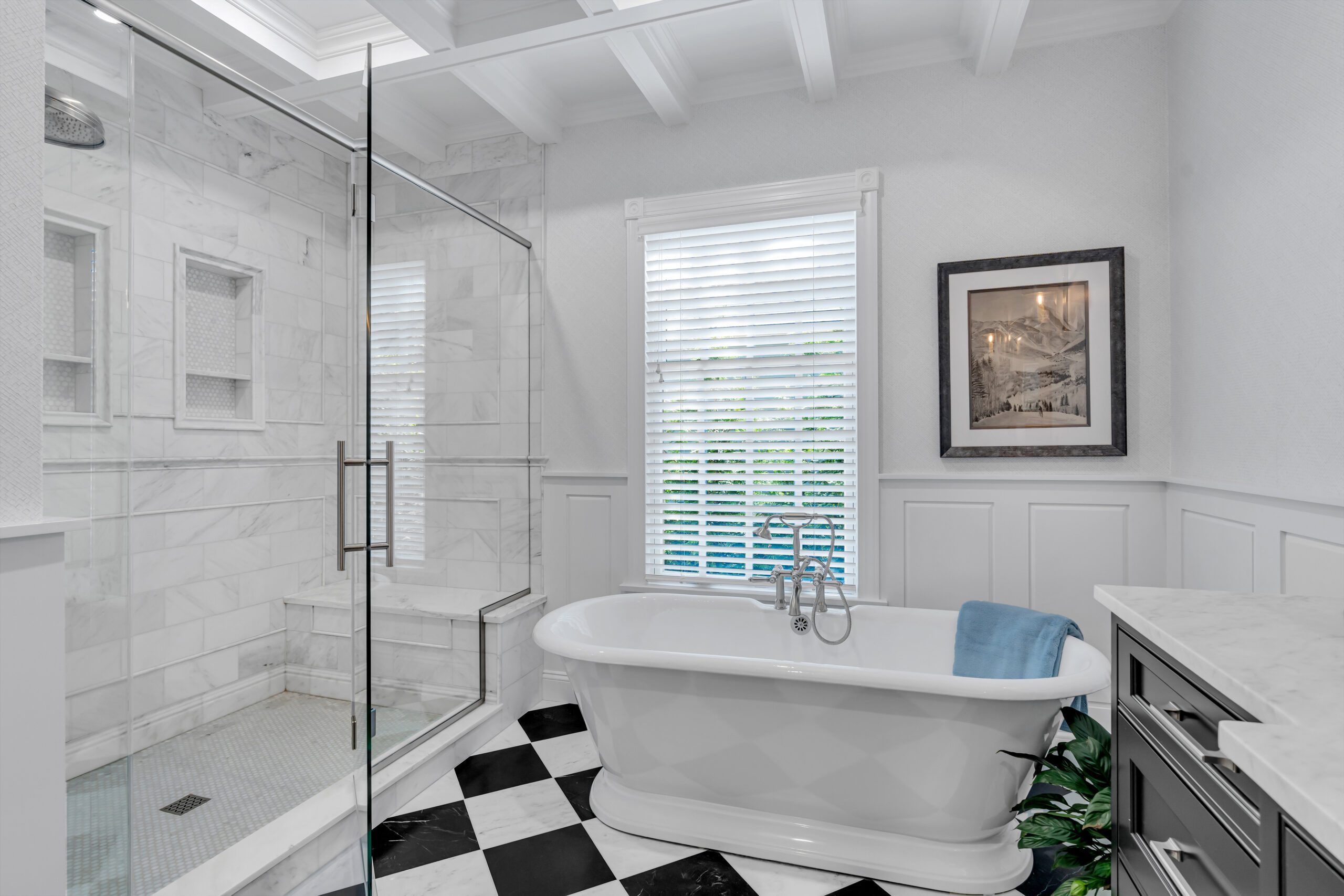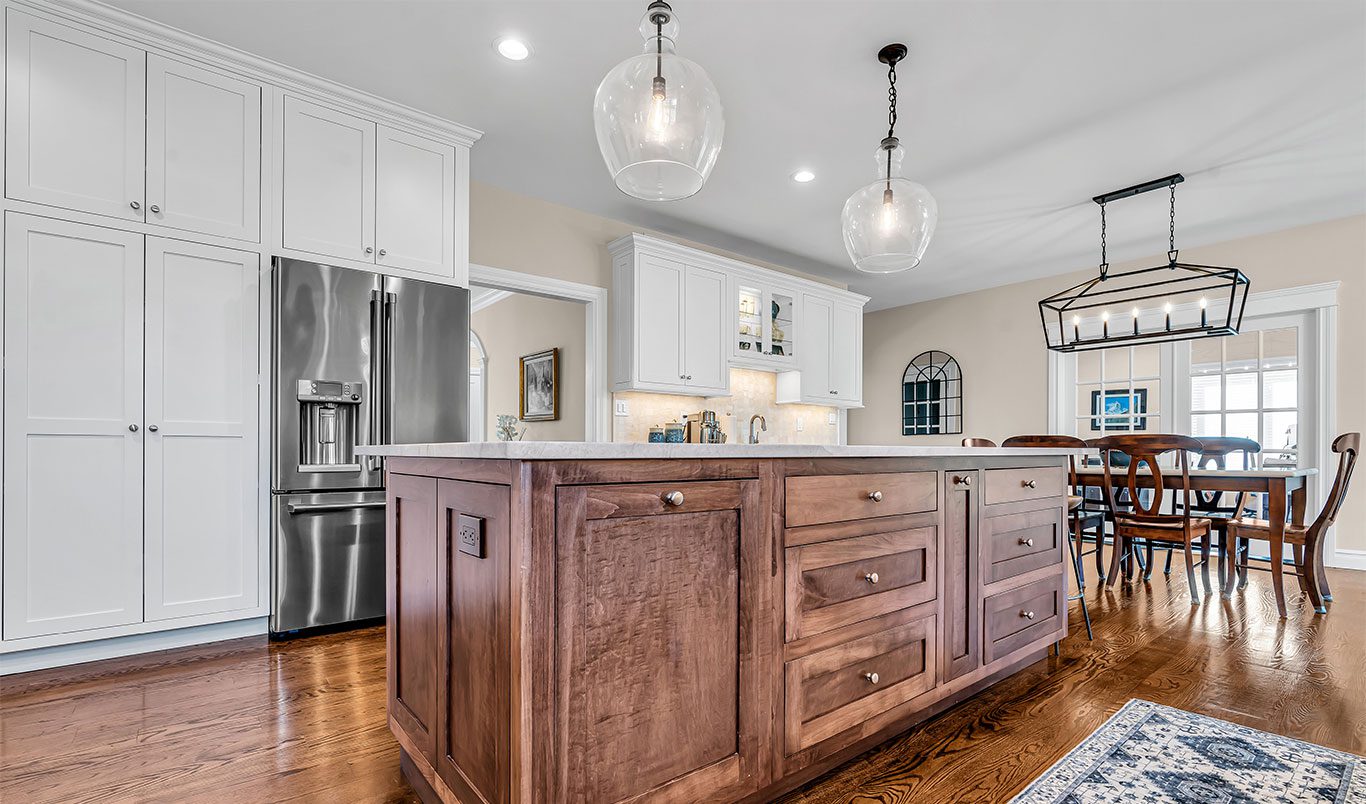
When homeowners start thinking seriously about remodeling, two rooms quickly rise to the top of the list: the kitchen and the bathroom. Not because they photograph well on Instagram. Because these rooms carry the weight of everyday life.
The kitchen handles traffic, mess, routines, conversations, storage, homework, coffee, holidays, and the constant cycle of cooking and cleanup. The bathroom deals with rushed mornings, tired evenings, steam, moisture, storage problems, and all the wear that comes from daily routines.
So when both spaces are showing their age, the question becomes pretty straightforward:
Should you remodel your kitchen and bathroom at the same time? Or split the work into phases?
The honest answer: it depends on your budget, your tolerance for disruption, and how long you plan to stay in the home. But even if you ultimately decide to remodel in phases, in most older New Jersey homes—especially throughout Monmouth and Ocean County—it makes more sense to at least plan both projects together. Without one clear plan that lays out your long-term remodeling strategy, your home is more likely to end up feeling patched together over time.
Here’s how to think through whether your project should happen all at once or in phases.
Quick Answer: Should You Remodel Your Kitchen and Bathroom Together?
In many cases, yes.
If both spaces need meaningful updates, your budget can support the scope, and your household can survive a period of disruption without losing its collective mind, choosing to remodel your kitchen and bathroom together can be a smart move.
Planning both remodels together can help you:
- Create a more cohesive look throughout the home
- Coordinate plumbing, electrical, and finish work more efficiently
- Reduce duplicated planning and scheduling
- Make smarter material selections
- Avoid expensive “we should’ve thought of that earlier” moments
That said, not every house—or every family—is a good candidate for remodeling the kitchen and bathroom at the same time.
If one room is clearly the bigger problem, the budget feels stretched already, or the logistics would make daily life miserable, phasing the work may be the better decision.
The important thing is this:
Even if you remodel one room at a time, you should still plan both spaces together from the beginning. That’s the difference between a phased remodel and a disconnected one.
Why Homeowners Remodel Their Kitchen and Bathroom Together
Kitchen and bathroom remodels have more overlap than many homeowners realize.
Both projects may involve:
- Plumbing
- Electrical work
- Tile
- Cabinetry or vanities
- Countertops
- Flooring
- Lighting
- Ventilation
- Fixtures
- Painting
- Inspections
- Finish carpentry
And every one of those categories affects scheduling, budget, and sequencing.
When projects are handled separately with no broader plan, homeowners often end up repeating parts of the process twice—twice the design conversations, twice the trade coordination, twice the disruption, twice the decision fatigue.
And yes, decision fatigue is real. At some point, every homeowner hits a wall where even choosing a faucet finish starts to feel like a personal attack. That’s why many homeowners step back and look at the kitchen and bathroom as part of one larger remodeling strategy.
Not because the rooms need to match perfectly but because planning both remodeling projects together has some serious advantages.
Here are five of the biggest ones homeowners who combine their kitchen and bathroom remodel projects enjoy.
1. You Can Create a More Cohesive Plan for the Home
Most remodels start with practical frustrations.
A cramped kitchen layout. Poor lighting. Not enough storage. A bathroom vanity that somehow holds nothing despite taking up half the room. Tile that has seen things.
But once homeowners begin digging into those issues, the conversation usually leads to the bigger question: How should this house actually function for the way we live now?
That is where planning both spaces together becomes valuable.
Maybe the kitchen needs better flow for entertaining. Maybe the bathroom needs storage that actually works for a busy morning routine. Maybe the entire home feels visually disconnected because previous renovations happened ten years apart with completely different styles.
Planning your kitchen and bathroom remodel together helps you make decisions with the whole home in mind.
That may include:
- Cabinet styles and wood tones
- Vanity design
- Hardware finishes
- Countertops
- Flooring transitions
- Lighting styles
- Plumbing fixtures
- Paint colors
- Overall feel and tone of the home
That does not mean your kitchen and bathroom should match perfectly. They shouldn’t feel copied and pasted, but they should feel like they belong in the same home. The goal is a home that feels layered and intentional. Not like every room belongs to a different decade.
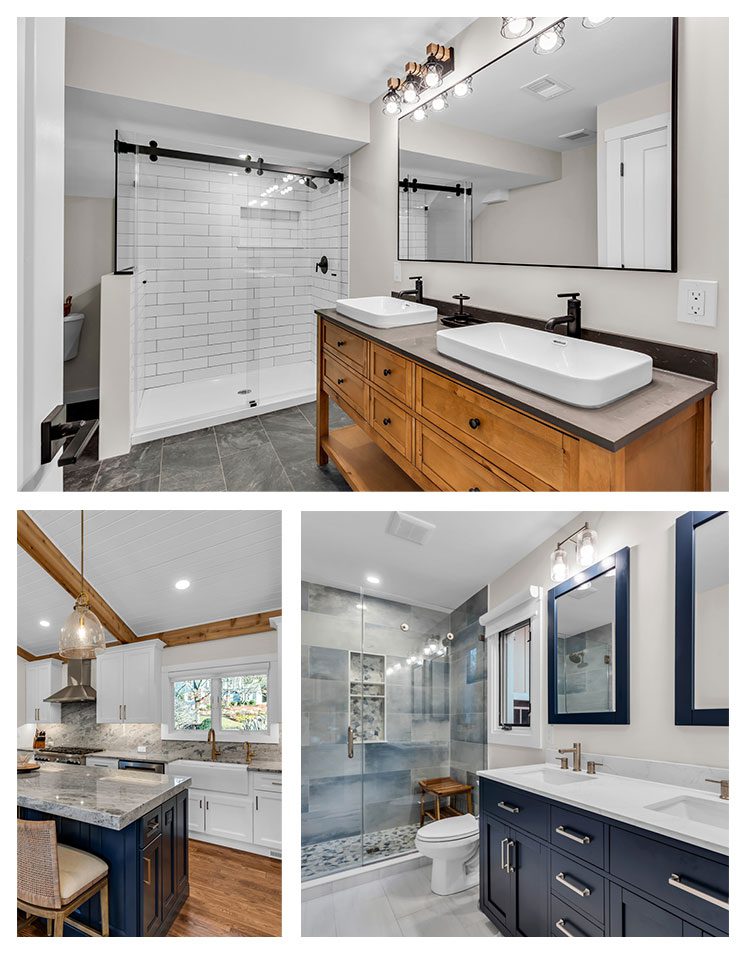
For example, you may choose warmer wood tones in the kitchen and carry that warmth into a bathroom vanity. Or you may use different tile in each space while keeping the same general color palette. Or you may vary the lighting fixtures while keeping the metal finishes consistent.
These choices are easier to make when the kitchen and bathrooms are considered together.
2. You May Reduce Duplicated Planning and Scheduling
Kitchen and bathroom remodels involve many of the same trades, so when projects happen separately, there is often unnecessary repetition built into the process.
Separate demolition schedules. Separate electrical planning. Separate plumbing coordination. Separate inspections.
None of that is inherently wrong, but it can create more stop-and-start construction than homeowners expect. In contrast, when projects are planned together, the builder can often create a cleaner construction sequence and identify overlapping work early.
For example, if your kitchen remodel requires electrical upgrades and your bathroom remodel requires new lighting, outlets, ventilation, and heated flooring, it makes sense to coordinate that planning up front. The same applies to plumbing changes, inspections, drywall repairs, flooring transitions, and finish details.
A good remodeling plan should answer questions like:
- Which areas of the home will be affected?
- Which trades need to be scheduled and when?
- Are there plumbing or electrical upgrades that affect both spaces?
- Will flooring need to transition between rooms?
- Are walls, ceilings, or adjacent spaces being opened?
- Are there long-lead materials that need to be ordered early?
- Will permits or inspections affect timing?
- Can the work be phased without creating rework later?
These details are much easier to address before construction begins. This does not mean the project becomes simple; a combined kitchen and bathroom remodel still needs careful management, especially in older homes where hidden surprises often lurk behind the drywall.
But a solid combined remodeling plan can reduce unnecessary backtracking, potentially saving you time, money, and stress in the long run.
3. You Can Make Smarter Material and Finish Decisions
One-room-at-a-time remodeling sounds simple until you try matching materials later.
Tile gets discontinued. Cabinet finishes change. Hardware lines get updated. Countertop availability shifts. Paint colors somehow look completely different in another room six months later.
Planning your kitchen and bathroom remodeling project together helps prevent that domino effect and allows you to create a more complete material strategy. You can decide where consistency matters, where each room should have its own character, and where you want to invest more.
For example:
- You may want plumbing fixtures that feel cohesive from room to room
- You may want to repurpose cabinetry removed from the kitchen to create additional bathroom storage
- You may want coordinating—not matching—tile selections
- You may want the same hardware finish throughout the home
- You may want the same countertop material in both spaces to allow you to purchase fewer slabs and invest those savings on upgraded appliances instead
- You may want flooring that transitions cleanly between renovated and non-renovated areas
Planning material selections and finishes for both spaces at once can be especially useful in homes where previous renovations were done at different times. Many Ocean County kitchen and bathroom remodel projects also involve coordinating newer finishes with older coastal home architecture and existing materials. A coordinated plan can help the home feel more intentional instead of patched together.
4. You May Limit the Total Disruption to Your Home
There is no version of a kitchen or bathroom remodel that is completely convenient. Anyone who tells you otherwise has never tried making coffee in a laundry room sink for six weeks.
A kitchen remodel affects cooking, storage, dishes, and traffic flow. A bathroom remodel affects privacy, schedules, shower access, and morning routines—which are already fragile enough in most households.
Remodeling your kitchen and bathroom at the same time may create a more intense disruption period. That needs to be considered honestly. But for some homeowners, one concentrated, well-planned remodeling period is easier than two separate projects that drag the disruptions over months or even years.
Instead of setting up temporary spaces twice, adjusting routines twice, managing construction traffic twice, and making hundreds of selections twice, you may prefer consolidating all the disruption into one larger project.
That can make sense if:
- You have another usable bathroom
- You can set up a temporary kitchen
- Your household can tolerate short-term inconvenience
- You want the finished spaces to feel connected
- You do not want finished work reopened later
- You would rather make decisions once instead of restarting the process
A combined remodel should not be approached casually. Before construction begins, you should understand how your household will function during the project, which spaces will be unavailable, where temporary routines will happen, and what decisions need to be made in advance.
5. You Can Build a Better Long-Term Budget
One of the biggest mistakes homeowners make is budgeting room by room without looking at the larger picture.
That is how you end up spending heavily on the kitchen, then realizing six months later the bathroom budget disappeared somewhere between custom cabinetry and upgraded lighting.
Planning your kitchen and bathroom remodel together gives you a more realistic understanding of total investment, project priorities, upgrade opportunities, areas to simplify, and which work should happen now versus later.
A combined remodel is not automatically cheaper; larger scope still means larger investment. But coordinated planning can reduce duplicated work and help avoid expensive revisions later.
For example:
- Flooring decisions in one room may affect adjacent spaces later
- Plumbing rough-ins may be smarter to handle upfront
- Lighting plans may need coordination
- Cabinet selections may influence future design decisions
A good remodeling budget is not just a number. It is a strategy.
When It May Be Better to Phase the Remodel
A combined remodel is not a badge of honor. It is simply one approach, and sometimes, it’s not the right one.
Phasing may make more sense if:
- The budget is not ready for both spaces
- One room has urgent issues
- Your household cannot realistically manage the disruption
- You need more time for design decisions
- You want to spread investment over time
- The home needs more exploratory work first
The mistake is not phasing; it’s phasing without a long-term plan. That’s when homeowners run into mismatched finishes, awkward transitions, duplicated labor, and expensive rework later.
A smarter approach is to develop the full vision first, then decide what gets built now and what waits. That way, the first project supports the second instead of complicating it.
Questions to Ask Before You Decide
If you are trying to decide whether to remodel your kitchen and bathroom together, start with practical questions.
Which space is causing the most daily frustration?
The answer is usually obvious pretty quickly. If your kitchen constantly fights your daily routine, start there. If the bathroom has leaks, ventilation problems, or functionality issues, that may move to the top of the list. The room that affects daily life the most often deserves the first look.
Are both projects mostly cosmetic—or more involved?
Once plumbing, electrical, layout changes, or ventilation upgrades enter the conversation, coordinated planning becomes much more valuable.
Do you want the home to feel more cohesive overall?
If your house has been renovated in scattered phases over decades, planning both spaces together can help unify the home visually and functionally.
Can your household realistically handle the disruption?
This may be the deciding factor.
Think about work schedules, children, pets, guests, holidays, daily routines, and access to another bathroom or temporary kitchen setup. A remodel can be well-planned and still be inconvenient. The question is whether the inconvenience is manageable.
Would planning both spaces now help avoid rework later?
Sometimes the biggest benefit is not building both spaces at once. It is making sure today’s decisions don’t create problems for tomorrow’s project.
That may include flooring transitions, fixture finishes, rough-in work, lighting plans, cabinetry selections, or paint colors.
Are you remodeling for resale, long-term living, or both?
If you are planning to stay in the home for many years, comfort, storage, accessibility, and daily function may matter most.
If resale is part of the equation, you may want to think about broad appeal, durable materials, and improvements that make the home feel updated without becoming overly personal. You may also want to think about when you plan to list your home, since that timeline may influence whether your remodeling project should happen all at once or in phases.
Why Early Builder Involvement Matters
Homeowners often spend months designing the “perfect” remodel before involving a builder, only to start collecting bids and discover:
- The design exceeds the budget
- Important construction realities were overlooked
- Existing conditions change the scope
- Different contractors are using completely different assumptions when creating their bid, rendering those bids useless for comparison purposes
Bringing a builder into the process earlier helps ground the project in reality before major decisions get locked in.
A good builder can help evaluate:
- Whether combining the projects makes sense
- Whether phasing is smarter
- Which decisions will impact cost most
- What hidden conditions may affect the scope
- Where plumbing, electrical, or structural details need review
- Whether permits or inspections are likely to be required
- Which materials need early ordering
- How construction sequencing should work
- What budget range is realistic for the scope.
This is especially valuable for kitchens and bathrooms because these rooms are not cosmetic-only projects. They are infrastructure projects disguised as design projects.
A beautiful remodel still needs a sound plan behind it. Involving a reliable builder early in the process is the best way to make sure your plan is sound before moving forward.
Start With a Plan That Fits Your Home
So, should you remodel your kitchen and bathroom at the same time?
Sometimes, absolutely.
If both spaces need attention equally, the budget supports the scope, and your household can manage the disruption, a combined remodel can create a more cohesive design, improve scheduling, simplify material decisions, and give you a clearer long-term plan for the home.
But sometimes, the budget, timeline, or household logistics point clearly toward separating the work into phases, and the smarter move is to start with one space while planning ahead for the next.
There is no universal right answer. Only the right answer for your home, your priorities, and the way your family actually lives.
Thinking about remodeling your kitchen and bathroom?
C Mac Contracting is a kitchen and bathroom remodel contractor serving homeowners throughout Monmouth County and Ocean County, New Jersey. Whether you want to remodel your kitchen and bathroom at the same time, phase the work strategically, or determine which path makes the most sense for you, contact us today to start the conversation. We’ll help you create a thoughtful plan with realistic expectations and a remodeling process designed around your vision, your budget, and how your home actually functions.
Explore by Topic
More From the Blog
-
8 Things You Need to Know Before Starting a Home Remodel
There’s something exciting about imagining your home with a brand-new kitchen, a beautifully updated bathroom, or a living space that…
-
How Plumbing Affects a Kitchen and Bathroom Remodel
When you’re planning a remodel, it’s easy to focus on the things you can see: cabinets, countertops, flooring, fixtures, and…
-
7 Home Remodel Upgrades Worth Splurging On
We spend a lot of time telling homeowners how to stay on budget during a remodel. Plan before you start.…