You bought the house knowing it needed some work.
Maybe the kitchen is stuck in another decade. The bathrooms are showing their age. The first-floor layout makes no sense. The electrical panel you’d rather not think too hard about. And then there are the unexpected issues you know you’ll find along the way.
If you own an old house in New Jersey, deciding what to remodel first isn’t always as simple as picking the room you dislike most.
So, where do you start?
The honest answer is: it depends on the condition of your home, how its systems are holding up, and what you eventually want the finished house to look like.
Here’s how we recommend thinking through it.
Step 1: Start With What Your House Needs
Before you start choosing cabinets or doomscrolling through bathroom tile ideas at 2:37 AM, make sure the house’s bones and major systems are in good shape.
In New Jersey, an old house remodel can mean looking at:
- Water intrusion and moisture problems
- Structural concerns
- Aging or undersized electrical systems
- Old plumbing
- Heating and cooling systems
- Roofing and exterior issues
- Windows and doors that need replacement
None of this is as exciting as a new kitchen island. We get it.
But if there’s a problem that could damage your new work or require you to open finished walls later, it usually makes sense to deal with that first.
That’s the kind of disappointment good planning will help to prevent.
Step 2: Think About Which Projects Affect Everything Else
Once the home’s core is sound, take a look at your entire remodeling wish list.
Renovations have a domino effect. Some projects need to be done first to avoid redoing things later-– like knocking down a dining room wall before remodeling your kitchen. Rooms bleed into each other and often require the same materials to keep it from looking like a patched-together mess.
Pay extra attention to projects involving:
- Removing or relocating walls
- Moving plumbing fixtures
- Electrical upgrades
- HVAC changes
- New windows or exterior doors
- Flooring that continues between rooms
- Major layout changes
You don’t necessarily have to complete every project at once. But you should know where you’re headed before you start.
A whole-home plan and a whole-home remodel are not the same thing.
You can absolutely renovate in phases. The important part is making sure phase one doesn’t create problems for phase two.
Step 3: What Would Make Daily Life Better?
Once the important structural and system work is accounted for, your priorities get more personal.
This is where we stop asking what the house needs and start asking what you need.
What frustrates you every day? Start there. Making Tuesday morning easier is often more of a payoff than making your home look more Pinterest-worthy.
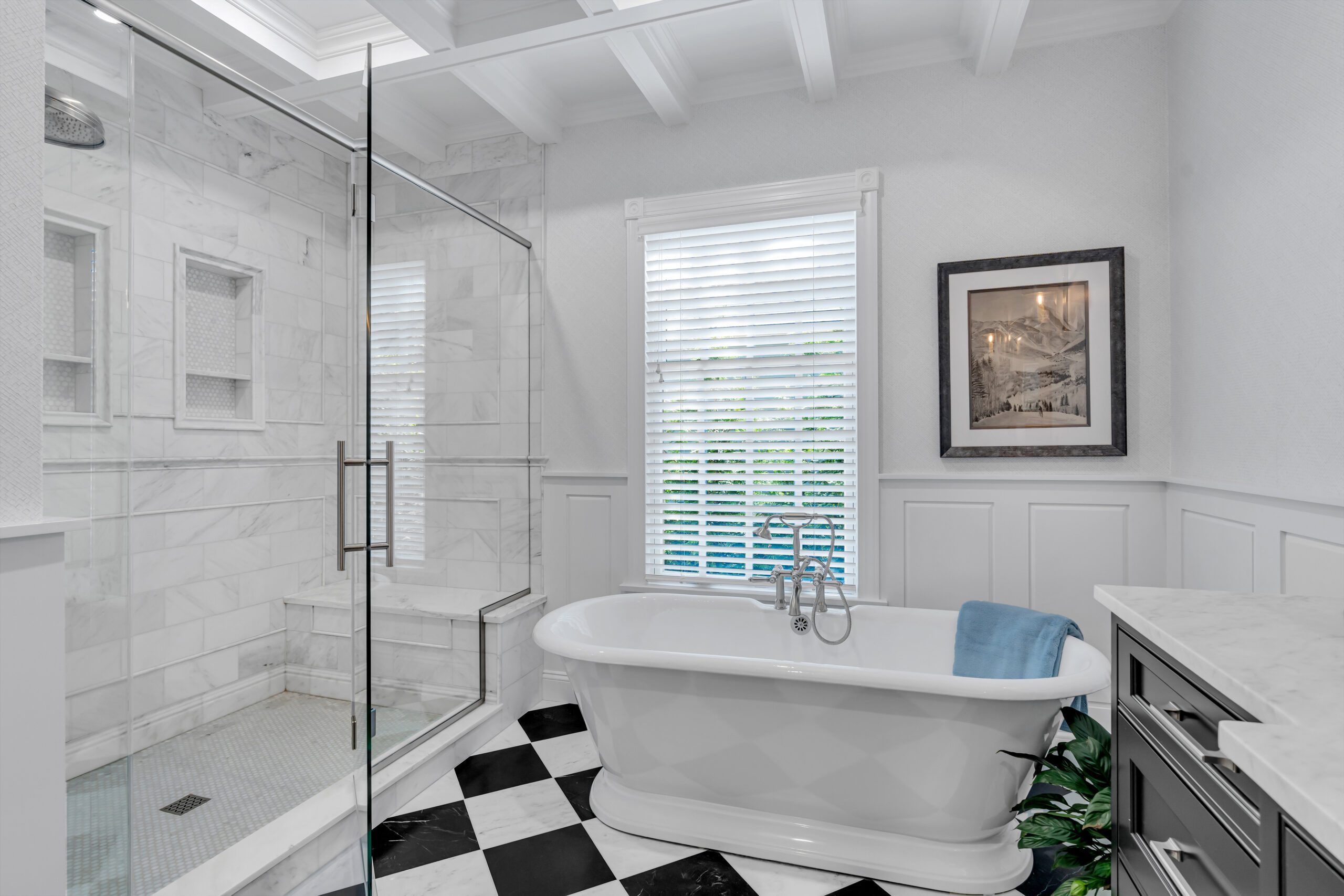
Bonus tip: Bathrooms are a common complaint, but with no clear idea of how to improve them. Here are some of our favorite tips.
Should You Remodel the Kitchen or Bathroom First?
This is one of the most common places homeowners get stuck.
While there are so many benefits to remodeling both at the same time, your budget might not agree. So if both rooms need work and you’re doing one at a time, which one wins?
Short answer: whichever is causing more problems or will hinder the other remodeling projects.
Remodel the kitchen first if:
- The kitchen is part of a larger first-floor layout change
- The layout makes cooking or entertaining difficult
- Appliances or electrical systems need significant updates
- Your family spends a lot of time there, and the space simply doesn’t work
A kitchen remodel can also affect more of the surrounding home than you might expect. Changing the layout may involve flooring, lighting, plumbing, electrical work, walls, doorways, and adjoining living spaces.
That makes it especially important to think ahead.
Remodel the bathroom first if:
- You have plumbing or moisture problems
- A bathroom isn’t functioning properly
- Your household has too few usable bathrooms
- The space creates a headache every morning
There is no right or wrong answer. Which one drives you crazier? Start there.
Note: Bathrooms often cost less than kitchens cost (smaller space, no appliances, etc), so if your current budget is limited, bathrooms might be a good place to start.
What If You Want to Remodel the Whole House Eventually?
This is where planning ahead can save you a lot of frustration.
While it is in the long run easier, quicker, and cheaper to remodel your home all at once, Your budget or schedule may not make it realistic to do all of that right now.
That’s fine.
A good remodeling plan can be phased.
The important thing is figuring out how those phases connect before construction begins.
For example, if you eventually want the same hardwood flooring throughout the first floor, that decision should be part of the conversation before you install a completely different floor in the kitchen.
If a future bathroom remodel will require plumbing work below a room you’re renovating now, think through that connection.
If you eventually want to remove walls, don’t design permanent cabinetry around a layout you already know you want to change.
Planning ahead doesn’t mean spending all the money today. It means trying not to spend the same money twice.
Older New Jersey Homes Have a Few Opinions of Their Own
If you live in an older home in Monmouth or Ocean County, you already know these houses have character.
Sometimes they have a little too much character.
Previous additions, decades-old plumbing, outdated wiring, uneven framing, moisture, DIY repairs from three owners ago — you don’t always know exactly what you’re working with until you get into it.
Homes near the Shore add another layer. Salt air, moisture, coastal weather, and years of exposure can affect materials and systems differently than they would farther inland.
That doesn’t mean an older home is a remodeling nightmare. Far from it. Some of our favorite projects involve taking an older home with great bones and making it work for the way a family lives today.
It just means the plan needs to leave room for reality.
That’s also why a realistic remodeling budget should include a contingency. When you’re working on an older house, finding something unexpected behind a wall isn’t automatically evidence that the plan is going poorly. Part of planning ahead is planning for possible unknowns.
A Simple Way to Prioritize Your Remodel
Every house is different, but if your remodeling list is getting long, this is a good order to start thinking about it:
1. Safety and structure
Address problems that could affect the safety or integrity of the home.
2. Major systems
Think plumbing, electrical, HVAC, roofing, moisture, and other systems that could affect future work.
3. Projects that impact other projects
Make your major layout and infrastructure decisions before spending heavily on finishes that may need to be changed later.
4. Everyday function
Prioritize the rooms and problems that have the biggest effect on how you actually live in the house.
5. Finishes and cosmetic updates
Once everything underneath is right, then have some fun with the things you can see.
This isn’t a hard-and-fast list. A house with solid systems and no structural concerns might jump straight to number four.
The point is to make decisions in an order that makes sense for your house rather than following a generic remodeling checklist.
You Don’t Have to Figure Out the Whole House at Once
One of the easiest ways to make remodeling stressful is feeling like you need every answer before you can even start.
You don’t.
What helps is understanding the big picture: what needs attention now, what you’d like to change later, and whether today’s project will affect tomorrow’s.
From there, you can build a realistic plan.
And sometimes that plan confirms exactly what you hoped: Yep, we can finally do the kitchen.
Either way, knowing before construction starts is a whole lot better than finding out halfway through. And that’s where we can help.
Planning a Home Remodel in Monmouth or Ocean County?
C Mac Contracting helps homeowners throughout Monmouth and Ocean Counties plan kitchen remodels, whole-home renovations, and other major home improvements with realistic expectations from the start.
Whether you already know which project comes first or you’ve got a list and aren’t sure where to begin, we’re happy to walk through it with you. We’ll look at what your home needs, what you want to accomplish, and how the pieces fit together.
Contact us for a free, no-pressure consultation, and let’s figure out a remodeling plan that makes sense for your home.
Explore by Topic
More From the Blog
-
8 Things You Need to Know Before Starting a Home Remodel
There’s something exciting about imagining your home with a brand-new kitchen, a beautifully updated bathroom, or a living space that…
-
How Plumbing Affects a Kitchen and Bathroom Remodel
When you’re planning a remodel, it’s easy to focus on the things you can see: cabinets, countertops, flooring, fixtures, and…
-
7 Home Remodel Upgrades Worth Splurging On
We spend a lot of time telling homeowners how to stay on budget during a remodel. Plan before you start.…